

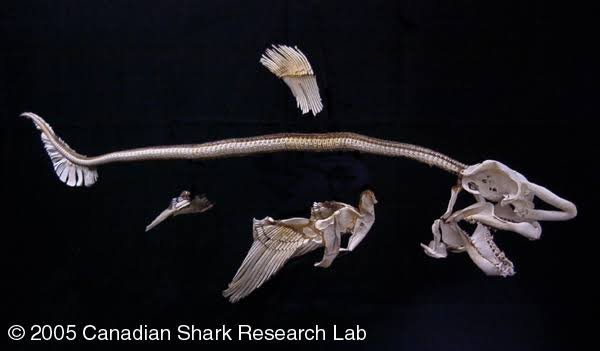
Introduction to Shark Skulls
Shark skulls are fascinating remnants of some of the ocean’s most intriguing predators. These unique structures not only provide insight into a shark’s biology but also tell us stories about their behavior and evolution. Imagine standing on a beach, spotting a washed-up shark skull, and realizing it’s like holding a piece of prehistoric history in your hands.
- Introduction to Shark Skulls
- The Importance of Identifying Shark Skull Types
- Overview of the Different Shark Skull Types
- Characteristics and Features of Each Type
- Identification Techniques and Tools
- Common Misconceptions about Shark Skulls
- Conclusion: Why Knowing Shark Skull Types is Crucial for Understanding these Creatures
Understanding the different types of shark skulls is key for marine enthusiasts, researchers, or anyone intrigued by these magnificent creatures. Each type has its own set of characteristics that can reveal so much about how sharks have adapted to their environments over millions of years. Whether you’re an aspiring marine biologist or simply curious about what lurks beneath the waves, diving into the world of shark skulls opens up an entirely new perspective on these apex predators.
Let’s explore why identifying these skull types matters and how you can become adept at recognizing them!
The Importance of Identifying Shark Skull Types
Identifying shark skull types is essential for several reasons. Each type reveals specific adaptations that have evolved over millions of years. These adaptations can provide insights into the shark’s feeding habits, behavior, and ecological roles.
Understanding the differences helps researchers track species health and biodiversity in our oceans. This information is crucial for conservation efforts aimed at protecting vulnerable shark populations.
Moreover, recognizing various skull types aids in paleontological studies. Fossilized remains offer glimpses into ancient marine ecosystems and evolutionary changes over time.
For enthusiasts and educators alike, knowing about shark skulls enhances appreciation for these magnificent creatures. It fosters a deeper understanding of their complexity beyond just being apex predators in the ocean.
Overview of the Different Shark Skull Types
Shark skulls are fascinating structures that reveal much about their evolutionary adaptations. Broadly, they can be categorized into three main types: hyostylic, amphistylic, and holostylic.
Hyostylic skulls are the most common among modern sharks. This type features a flexible connection between the upper jaw and skull, allowing for greater mobility when feeding.
Amphistylic skulls offer a blend of flexibility and stability. These sharks have both cartilaginous support in the front and a more rigid structure at the back of their jaws.
Holostylic skulls represent an advanced adaptation found in certain species like skates and rays. Here, the upper jaw is fused to the cranium providing better control during prey capture.
Understanding these classifications helps researchers trace shark evolution as well as their ecological roles in marine environments. Each type showcases unique traits suited to various lifestyles underwater.
Characteristics and Features of Each Type
Different shark skull types showcase a variety of characteristics that reveal much about their evolution and behavior.
The **Galeomorphi** group, for instance, features a more traditional structure. Their skulls are often robust with elongated snouts, adapted for hunting larger prey in open waters.
In contrast, the **Squaliformes** have a more compact skull design. This adaptation allows them to thrive in deep-sea environments where space is limited and visibility is low.
Another fascinating type is the **Lamniformes**, which exhibits a unique combination of strength and flexibility. Their jaw structures enable powerful bites while maintaining agility during quick maneuvers.
The **Orectolobiformes**, or carpet sharks, have flattened skulls adorned with intricate patterns. These adaptations help them blend into their surroundings on ocean floors.
Each type’s distinctive features tell an important story about its ecological niche and evolutionary path within marine ecosystems.
Identification Techniques and Tools
Identifying shark skull types requires a mix of observation and the right tools. A good magnifying glass can reveal intricate details like tooth structure and suture lines that are often overlooked.
Field guides specific to elasmobranchs offer valuable insights. These resources provide images, descriptions, and comparisons that help in distinguishing one skull type from another.
Digital imaging techniques have changed the game for researchers. High-resolution photographs combined with 3D modeling allow for precise analysis without damaging specimens.
For hands-on identification, consider using calipers to measure dimensions accurately. Measurements such as length between jaws or width across the snout can be key indicators of species.
Participation in workshops or online communities can enhance your skills further. Engaging with experts provides practical knowledge while also exposing you to diverse perspectives on classification methods.
Common Misconceptions about Shark Skulls
Many people believe that all shark skulls are made entirely of bone. In reality, sharks possess cartilaginous structures, making their skulls lightweight and flexible. This unique characteristic allows them to swim swiftly through the water.
Another misconception is that larger sharks have correspondingly larger skulls. While size can vary significantly among species, it doesn’t always relate to overall body length. Some smaller species have surprisingly large skull features suited for their feeding habits.
Additionally, there’s a widespread belief that shark skulls are identical across different types of sharks. Each species has distinct adaptations visible in their jaw structure and teeth placement—key indicators of diet and hunting strategies.
Many assume that examining a shark’s head is enough to identify its type accurately. However, a comprehensive understanding often requires looking at other physical traits beyond just the skull itself.
Conclusion: Why Knowing Shark Skull Types is Crucial for Understanding these Creatures
Understanding the different types of shark skulls enhances our comprehension of these remarkable creatures. Each skull type tells a story about adaptation, behavior, and habitat. By identifying them accurately, researchers can glean important insights into species evolution and ecological roles.
Knowledge of shark skull types also plays a vital role in conservation efforts. With sharks facing numerous threats due to human activity, knowing their anatomical differences aids in protective measures tailored for specific species. It helps promote awareness and education about these fascinating marine animals.
Shark skull identification is not just an academic exercise; it bridges gaps between science and public understanding. As we learn more about these enigmatic hunters of the sea through their skeletal structures, we foster deeper appreciation for their place in our oceans.
Recognizing the nuances among various shark skulls paves the way toward informed discussions on biodiversity conservation and marine ecosystems as a whole.