

Introduction to Lunar Rock color
Have you ever gazed up at the moon and wondered what it’s made of? Beyond its ethereal glow lies a fascinating world of lunar rocks, each with unique colors that tell stories of ancient cosmic events. Understanding lunar rock color is not just for scientists; it opens a window into our universe’s past and helps us appreciate the celestial body that has captivated humanity for centuries. Whether you’re an aspiring astronaut or simply a curious stargazer, diving into the hues of these extraterrestrial materials can be both intriguing and educational. Let’s unravel the mysteries behind lunar rock color together!
Explanation of Lunar Rock Color
Lunar rock color is a fascinating aspect of geology that reveals much about the Moon’s history. Unlike Earth, where water and weather alter rocks over time, lunar rocks retain their original hues due to the absence of atmospheric influences.
These colors range from gray to black, with occasional hints of green or reddish tones. The variations stem from different mineral compositions found in each rock type.
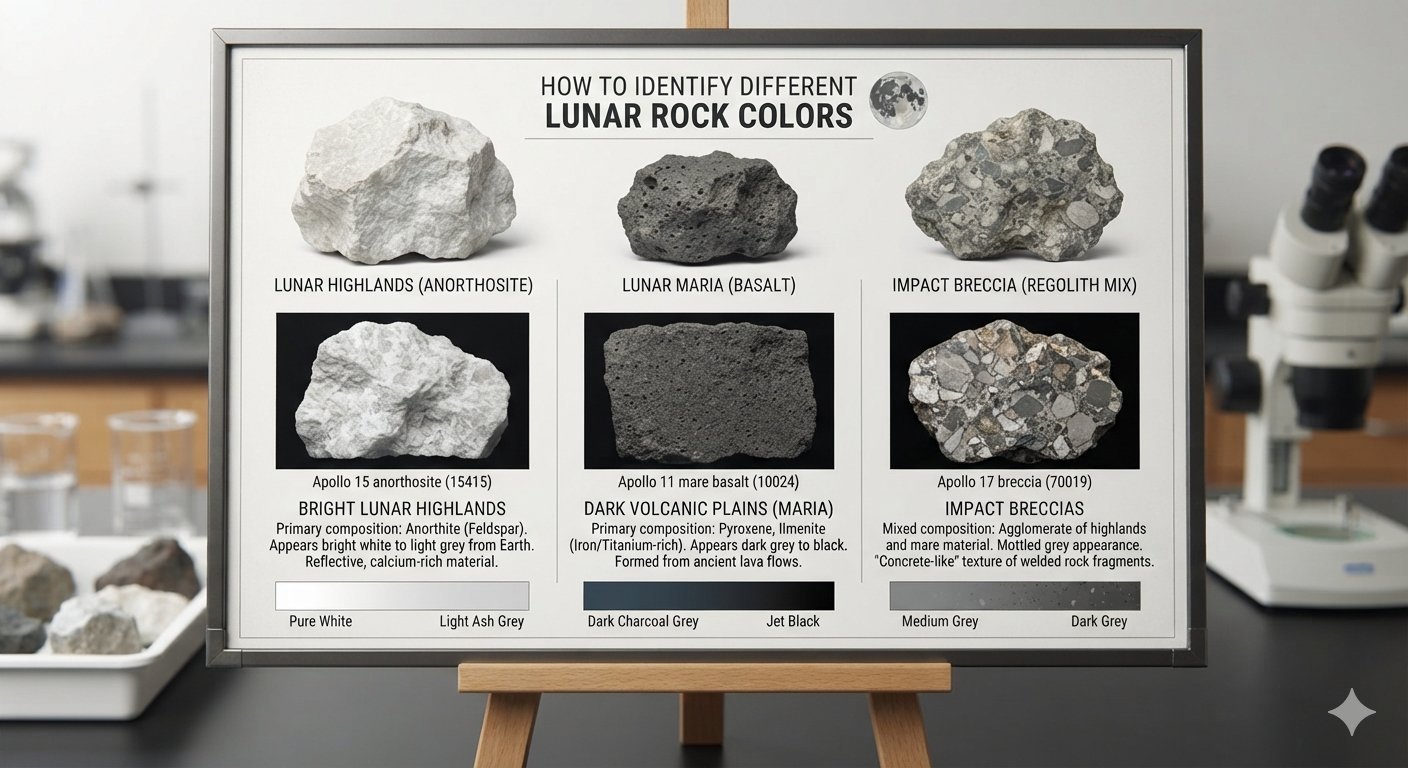
For instance, basalt typically appears darker because it contains iron-rich minerals. In contrast, anorthosite displays lighter shades due to its high plagioclase content.
Understanding these colors helps scientists piece together geological events on the Moon’s surface. Each hue tells a story about volcanic activity and impact processes that shaped our celestial neighbor over billions of years.
Factors that Affect Lunar Rock Color
Lunar rock color is influenced by several factors, primarily the mineral composition. Different minerals absorb and reflect light differently, resulting in varied colors. Basalts tend to be darker due to high iron content, while anorthosites are lighter because of their plagioclase feldspar richness.
The environment where these rocks formed plays a role too. Rocks exposed to solar wind or micrometeorite impacts can change hue over time. These natural processes alter surface properties and affect how we perceive color.
Temperature also impacts lunar rock appearance. Extreme temperature variations can cause physical changes in the minerals, leading to shifts in color.
Lunar dust adds another layer of complexity. When dust settles on rocks, it masks underlying colors and creates an illusion that affects visual interpretation during analysis. Each factor intertwines to create a diverse palette across the Moon’s surface.
Identifying Lunar Rocks by Color and Composition
Identifying lunar rocks involves a keen eye for both color and composition. The surface of the Moon presents an array of hues, each telling a unique story about its origin.
When examining these celestial stones, colors can range from dark basalts—often black or gray—to lighter-colored anorthosites that appear white or pale. Each shade offers clues about the rock’s mineral makeup.
For instance, darker rocks typically contain abundant iron and magnesium minerals. In contrast, lighter samples may have higher concentrations of plagioclase feldspar.
Using tools like spectrometers can help analyze the specific light wavelengths reflected by these rocks, revealing their elemental secrets. This scientific approach bridges visual observation with compositional analysis for accurate identification.
Understanding both color variations and mineral presence enhances our knowledge of lunar geology. It opens doors to unraveling the Moon’s history and formation processes over billions of years.
Common Colors and Types of Lunar Rocks
Lunar rocks come in a fascinating array of colors, each revealing secrets about the Moon’s history. The most common hues include shades of gray, black, and even reddish tones.
Basalt is one type that often appears dark gray to black. This volcanic rock forms from cooled lava and indicates ancient lunar activity. It usually contains minerals like pyroxene and olivine.
In contrast, anorthosite showcases lighter shades, typically white or pale gray. Composed mainly of plagioclase feldspar, it paints a picture of the Moon’s crustal composition.
Some lunar samples display unusual colors due to specific mineral content or radiation effects. Researching these variations helps scientists understand geological processes on our celestial neighbor.
Each color tells a story—one we’re only beginning to decode through exploration and analysis.
The Importance of Studying Lunar Rock Color
Studying lunar rock color is essential for understanding the Moon’s geological history. Each hue offers clues about the processes that shaped its surface over billions of years.
Different colors reveal variations in mineral composition and age. For instance, darker rocks often indicate volcanic activity, while lighter shades can suggest impact events or ancient crust formation.
Analyzing these colors helps scientists decode the Moon’s past environments. Such insights are vital for future missions, especially when considering potential resources for human exploration.
Moreover, examining lunar rock color contributes to our knowledge of other celestial bodies. The findings could lead to a broader understanding of planetary formation across the solar system.
This research fuels curiosity and advances technology related to space exploration. It opens new pathways for discovery beyond our planet as we seek answers about where we come from and what lies ahead.
Conclusion
Understanding lunar rock color is essential for both amateur enthusiasts and seasoned geologists. The hues of these extraterrestrial materials can reveal a wealth of information about the Moon’s history and geological processes. By recognizing the various factors that influence color—such as mineral composition, exposure to solar radiation, and weathering—we gain deeper insights into their formation.
Identifying different types of lunar rocks by their colors not only enhances our knowledge but also sparks curiosity about what lies beyond Earth. From basaltic dark shades to lighter anorthosite variations, each type has a story etched in its surface.
The study of lunar rock color plays a crucial role in ongoing research about our nearest celestial neighbor. It helps scientists unravel how volcanic activity shaped the Moon’s landscape over billions of years while providing clues about potential resources for future missions.
This fascinating field offers endless opportunities for discovery and inspires continued exploration, making every observation count toward understanding the universe better.